

PARLIAMENT IN VIEW


SCOTTISH CATHOLIC NEWS

CATHOLIC SOCIAL TEACHING
CAMPAIGN NEWS
NEWS FROM THE SCOTTISH PARLIAMENT









Add your name to the Care Not Killing Scotland Petition opposing the legalisation of Assisted Suicide

CATHOLIC SOCIAL TEACHING
RELIGIOUS FREEDOM
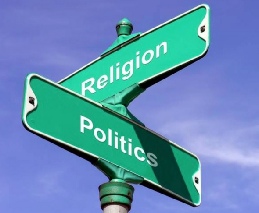
Religious freedom is of paramount value in that it recognizes that an essential element of human dignity is the freedom to direct our actions in the light of reason and conscience. This right is not merely concerned with the ability to worship but also with the whole conduct of a person's life. It includes the right to manifest one's belief publicly and to do so with others to establish and maintain institutions in accordance with the ethos of the religion.
EXTRACTS FROM CHURCH TEACHING
Dignitatis Humanae
2. This Vatican Council declares that the human person has a right to religious freedom. This freedom means that all men are to be immune from coercion on the part of individuals or of social groups and of any human power, in such wise that no one is to be forced to act in a manner contrary to his own beliefs, whether privately or publicly, whether alone or in association with others, within due limits.
The Council further declares that the right to religious freedom has its foundation in the very dignity of the human person, as this dignity is known through the revealed Word of God and by reason itself.(2) This right of the human person to religious freedom is to be recognized in the constitutional law whereby society is governed, and thus it is to become a civil right.
Message for World Day of Peace 2011
Religious freedom expresses what is unique about the human person, for it allows us to direct our personal and social life to God, in whose light the identity, meaning and purpose of the person are fully understood. To deny or arbitrarily restrict this freedom is to foster a reductive vision of the human person; to eclipse the public role of religion is to create a society which is unjust, inasmuch as it fails to take account of the true nature of the human person; it is to stifle the growth of the authentic and lasting peace of the whole human family.
For this reason, I implore all men and women of good will to renew their commitment to building a world where all are free to profess their religion or faith, and to express their love of God with all their heart, with all their soul and with all their mind (cf. Mt 22:37). This is the sentiment which inspires and directs this Message for the XLIV World Day of Peace, devoted to the theme: Religious Freedom, the Path to Peace.
6. Religious freedom, like every freedom, proceeds from the personal sphere and is achieved in relationship with others. Freedom without relationship is not full freedom. Religious freedom is not limited to the individual dimension alone, but is attained within one's community and in society, in a way consistent with the relational being of the person and the public nature of religion.
Relationship is a decisive component in religious freedom, which impels the community of believers to practise solidarity for the common good. In this communitarian dimension, each person remains unique and unrepeatable, while at the same time finding completion and full realization.
The contribution of religious communities to society is undeniable. Numerous charitable and cultural institutions testify to the constructive role played by believers in the life of society. More important still is religion's ethical contribution in the political sphere. Religion should not be marginalized or prohibited, but seen as making an effective contribution to the promotion of the common good. In this context mention should be made of the religious dimension of culture, built up over centuries thanks to the social and especially ethical contributions of religion. This dimension is in no way discriminatory towards those who do not share its beliefs, but instead reinforces social cohesion, integration and solidarity. [TOP]
Religious freedom, a force for freedom and civilization:
dangers arising from its exploitation
7. The exploitation of religious freedom to disguise hidden interests, such as the subversion of the established order, the hoarding of resources or the grip on power of a single group, can cause enormous harm to societies. Fanaticism, fundamentalism and practices contrary to human dignity can never be justified, even less so in the name of religion. The profession of a religion cannot be exploited or imposed by force. States and the various human communities must never forget that religious freedom is the condition for the pursuit of truth, and truth does not impose itself by violence but "by the force of its own truth". In this sense, religion is a positive driving force for the building of civil and political society.
How can anyone deny the contribution of the world's great religions to the development of civilization? The sincere search for God has led to greater respect for human dignity. Christian communities, with their patrimony of values and principles, have contributed much to making individuals and peoples aware of their identity and their dignity, the establishment of democratic institutions and the recognition of human rights and their corresponding duties.
Today too, in an increasingly globalized society, Christians are called, not only
through their responsible involvement in civic, economic and political life but also
through the witness of their charity and faith, to offer a valuable contribution
to the laborious and stimulating pursuit of justice, integral human development and
the right ordering of human affairs. The exclusion of religion from public life deprives
the latter of a dimension open to transcendence. Without this fundamental experience
it becomes difficult to guide societies towards universal ethical principles and
to establish at the national and international level a legal order which fully recognizes
and respects fundamental rights and freedoms as these are set forth in the goals
-
An issue of justice and civility: fundamentalism and hostility to believers compromise the positive secularity of states
8. The same determination that condemns every form of fanaticism and religious fundamentalism must also oppose every form of hostility to religion that would restrict the public role of believers in civil and political life.
It should be clear that religious fundamentalism and secularism are alike in that both represent extreme forms of a rejection of legitimate pluralism and the principle of secularity. Both absolutize a reductive and partial vision of the human person, favouring in the one case forms of religious integralism and, in the other, of rationalism. A society that would violently impose or, on the contrary, reject religion is not only unjust to individuals and to God, but also to itself. God beckons humanity with a loving plan that, while engaging the whole person in his or her natural and spiritual dimensions, calls for a free and responsible answer which engages the whole heart and being, individual and communitarian. Society too, as an expression of the person and of all his or her constitutive dimensions, must live and organize itself in a way that favours openness to transcendence. Precisely for this reason, the laws and institutions of a society cannot be shaped in such a way as to ignore the religious dimension of its citizens or to prescind completely from it. Through the democratic activity of citizens conscious of their lofty calling, those laws and institutions must adequately reflect the authentic nature of the person and support its religious dimension. Since the latter is not a creation of the state, it cannot be manipulated by the state, but must rather be acknowledged and respected by it.[TOP]
Whenever the legal system at any level, national or international, allows or tolerates religious or antireligious fanaticism, it fails in its mission, which is to protect and promote justice and the rights of all. These matters cannot be left to the discretion of the legislator or the majority since, as Cicero once pointed out, justice is something more than a mere act which produces and applies law. It entails acknowledging the dignity of each person which, unless religious freedom is guaranteed and lived in its essence, ends up being curtailed and offended, exposed to the risk of falling under the sway of idols, of relative goods which then become absolute. All this exposes society to the risk of forms of political and ideological totalitarianism which emphasize public power while demeaning and restricting freedom of conscience, thought and religion as potential competitors.
Dialogue between civil and religious institutions
9. The patrimony of principles and values expressed by an authentic religiosity is a source of enrichment for peoples and their ethos. It speaks directly to the conscience and mind of men and women, it recalls the need for moral conversion, and it encourages the practice of the virtues and a loving approach to others as brothers and sisters, as members of the larger human family.
With due respect for the positive secularity of state institutions, the public dimension of religion must always be acknowledged. A healthy dialogue between civil and religious institutions is fundamental for the integral development of the human person and social harmony. [TOP]
Further reading


©Catholic Parliamentary Office, 3rd Floor, 5 St Vincent Place, GLASGOW G1 2DH
An Agency of the Bishops’ Conference of Scotland Catholic National Endowment Trust (also known as The Bishops’ Conference of Scotland) Charity Number: SCO 16650